A leaking roof rarely announces itself with a dramatic indoor waterfall. Most leaks start quietly — a faint stain, a slightly musty smell, a shingle that looks just a little off. By the time water is dripping onto your floors, significant hidden damage has likely already occurred to your decking, insulation, and framing.
At Vulcan Roofing, we inspect hundreds of Nashville-area roofs every year. The homeowners who fare best are the ones who spotted the early warning signs and acted quickly. Here are the three most telling signs of a roof leak — and what you should do the moment you notice them.
SIGN 1 — Water Stains or Discoloration on Your Ceilings and Walls
That yellowish-brown ring on your ceiling isn’t just cosmetic. It’s a classic calling card of an active or recent roof leak. Water travels along rafters and sheathing before it ever drips, which means the stain you see on the ceiling may not be directly below the source of the leak on your roof.
Watch for these warning signs:
- Brown, tan, or yellowish rings on drywall ceilings — especially in upper-floor rooms or directly below an attic
- Bubbling, peeling, or blistering paint on ceilings or upper walls
- Dark streaks running down interior walls from the ceiling line
- Sagging or soft spots in your ceiling, indicating prolonged moisture saturation
- Water stains that appear or grow larger after heavy rain
A single small stain may seem minor. But every stain represents water that has already penetrated your roof, soaked through insulation, and reached your living space — which means the pathway for more water is already established.
SIGN 2 — Musty Odors, Mold, or Unexplained Humidity Indoors
One of the most overlooked signs of a roof leak is the one you smell before you see it. Moisture trapped in attic insulation or wall cavities creates the perfect environment for mold and mildew to take hold — often long before any visible staining appears.
If you notice a musty, damp, or earthy smell in your home — especially on upper floors or in closets that share a wall with the attic — it’s worth investigating. Mold remediation is substantially more expensive than roof repair, so catching this early matters.
Watch for these warning signs:
- Persistent musty smell in upstairs rooms, attics, or walk-in closets with exterior walls
- Visible dark spotting or fuzzy growth on attic insulation, wood framing, or ceiling drywall
- Unexplained increases in indoor humidity, particularly in rooms near the roofline
- Condensation forming on windows in rooms that didn’t previously have the problem
- Allergy flare-ups or respiratory irritation among household members
If you can safely access your attic, take a flashlight and look for dark staining on rafters, wet or compressed insulation, or any daylight visible through the roof decking. Any of these is an urgent indicator that professional evaluation is needed.
SIGN 3 — Missing, Curling, or Damaged Shingles — Especially Around Flashing
You don’t need to climb onto your roof to spot this one. From the ground, a careful visual inspection can reveal a lot. Shingles are your roof’s first line of defense, and when they’re compromised, water infiltration is often not far behind.
After any significant storm, hail event, or high winds, walk the perimeter of your home and look up. Here’s what to look for:
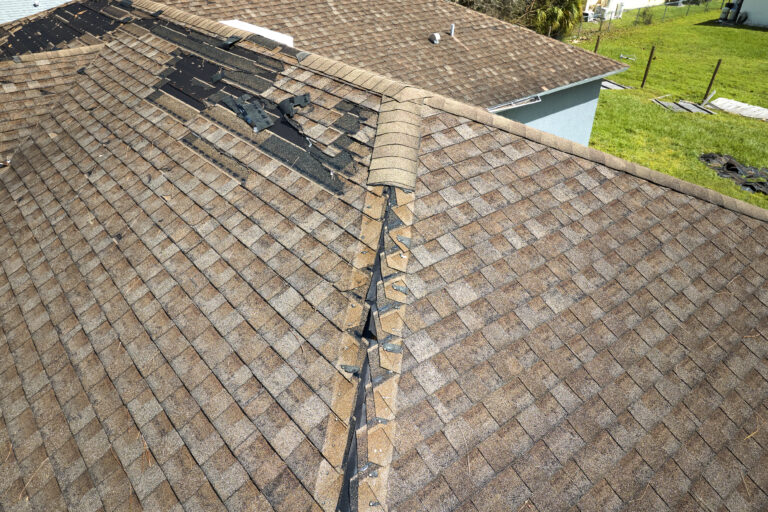
- Shingles that are visibly missing, cracked, or have curled or lifted edges
- Granule loss — dark streaks or bald patches on shingles where granules have worn away
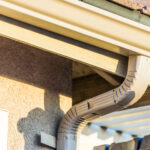
- Granule buildup in your gutters after rain, a sign shingles are deteriorating
- Damaged, bent, or separated metal flashing around chimneys, skylights, vents, or valleys
- Visible gaps, rust, or separation at any roof penetration point
- Shingle debris in your yard after wind events
Flashing failures are among the most common causes of residential roof leaks. Because flashing is metal, it expands and contracts with temperature changes and can separate from the sealant that holds it in place over time. Even a small gap allows significant water intrusion.
What to Do When You Spot These Signs
Acting quickly limits damage and keeps repair costs manageable. Here’s the sequence we recommend:
- Don’t wait for more symptoms. One sign is enough to warrant a professional inspection. Leaks don’t resolve themselves — they grow.
- Document what you’re seeing. Take photos of any ceiling stains, damaged shingles, or mold. Timestamps help if you’re filing an insurance claim.
- Check your attic if it’s safe to do so. Look for wet insulation, dark wood staining, or light visible through the decking.
- Protect the interior. Place buckets or towels under any active drips and move valuables away from the affected area.
- Call a licensed roofing contractor for a free inspection. A professional can identify the exact source of the leak and provide a transparent quote before any work begins.
- If the damage is storm-related, contact your insurer. A qualified roofer can help document the damage and work alongside your adjuster.
When It Becomes an Emergency
If you’re dealing with active heavy water intrusion or visible structural damage after a storm, don’t wait for business hours. Vulcan Roofing offers 24/7 emergency services for Nashville-area homeowners — including emergency roof tarping, immediate leak mitigation, and temporary repairs to protect your property until a permanent fix is scheduled.
Not Sure What Shape Your Roof Is In?
Vulcan Roofing offers a free roof inspection and a complimentary Roofing Score Report — a plain-language assessment of your roof’s condition with no pressure and no obligation. We serve Nashville and the surrounding Middle Tennessee area.
📞 Call or text: (615) 604-4858 🌐 Schedule online: thevulcanroofingcompany.com/contact